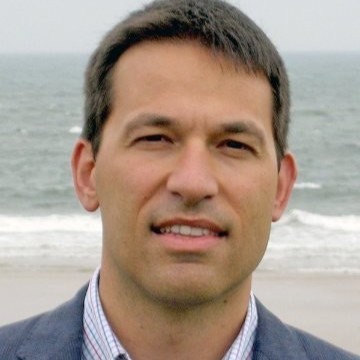
Dr Tim Stojanovic
Last modified: October 9, 2026
About
PhD
Dip Soc. Sci. Res.
FRGS
FHEA
About the organisation(s) I've worked for
Organisation name:
University of St AndrewsAbout my experience and expertise
Personal statement:
I am an environmental geographer trained as a social scientist, with research profile in the governance of oceans and coasts. Through my scholarship, I seek to understand human-environment interactions, and collaborate in interdisciplinary teams across the science-policy interface, to support learning and action.
Key Areas of Expertise:
-Marine Planning, Marine Protected Areas, Coastal Partnerships, Shoreline Management
-Interdisciplinary sustainability research, including Coastal Adaptation to Climatic Change
-Social values and significance of coasts and seas: Coastal Communities and Wellbeing, Cultural Ecosystem Services, Seascapes.
Collaboration opportunities:
Collaborating with practitioners and natural scientists. Contributing:
-Theories for governing marine and coastal environments, and marine protected areas.
-Practicable techniques: soft systems modeling, qualitative comparative analysis, case study research (interviews, focus groups, workshops, surveys), deliberative workshops.
-Institutional analysis and Policy analysis.
-Measuring the social and cultural significance of coasts and oceans: seascape, wellbeing, socio-demographic profiles, cultural ecosystem services.
Publications:
Marine Planning, Marine Protected Areas, Coastal Partnerships, Shoreline Management:
Stojanovic, T. 2025. A History of Shoreline Management Planning: Lessons for Governing the Shoreface. Sustainability 17(20): 9166. https://doi.org/10.3390/su17209166
Stojanovic, T. A., and S. J. Boyes 2024. Legal and Management Classifications for Estuaries and Coasts. 323–343 In. D. Baird, and M. Elliott (eds.) Treatise on Estuarine and Coastal Science, 2nd Edition. Elsevier, Oxford. http://dx.doi.org/10.1016/B978-0-323-90798-9.00090-1
Stojanovic, T., and K. Gee 2020. Governance as a framework to theorise and evaluate marine planning. Marine Policy 120: 104115. https://doi.org/10.1016/j.marpol.2020.104115
Greenhill, L., T. A. Stojanovic, and P. Tett 2020. Does marine planning enable progress towards adaptive governance of marine systems? Lessons from Scotland’s regional marine planning process. Maritime Studies 19(3): 299–315. https://doi.org/10.1007/s40152-020-00171-5
Bisaro, A., M. De Bel, J. Hinkel, S. Kok, T. Stojanovic, and D. Ware 2020. Multilevel governance of coastal flood risk reduction: A public finance perspective. Environmental Science & Policy 112: 203-212. https://doi.org/10.1016/j.envsci.2020.05.018
Stojanovic, T., and C. J. Q. Farmer 2013. The development of world oceans & coasts and concepts of sustainability. Marine Policy 42: 157–165. https://doi.org/10.1016/j.marpol.2013.02.005
Smith, H. D., F. Maes, T. A. Stojanovic, and R. C. Ballinger 2011. The integration of land and marine spatial planning. Journal of Coastal Conservation: Planning and Management 15(2): 291-303 https://doi.org/10.1007/s11852-010-0098-z
Stojanovic, T. A., and R. C. Ballinger 2009. Integrated Coastal Management: A comparative analysis of four UK initiatives. Applied Geography 29(1): 49-62. https://doi.org/https://doi.org/10.1016/j.apgeog.2008.07.005
Stojanovic, T., and N. Barker 2008. Improving Governance through local Coastal Partnerships in the UK. Geographical Journal 174(4): 344-360. https://doi.org/10.1111/j.1475-4959.2008.00303.x
Stojanovic, T. A., R. C. Ballinger, and C. S. Lalwani 2004. Successful integrated coastal management: measuring it with research and contributing to wise practice. Ocean and Coastal Management 47(5-6): 273-298. https://doi.org/doi:10.1016/j.ocecoaman.2004.08.001
Interdisciplinary sustainability research, including Coastal Adaptation to Climatic Change:
Stojanovic, T. A., J. Ntajal, and K. Brown 2026. Interdisciplinarity: a core theme and practice in sustainability research. A. Brown, and S. Gilgan (eds.) Rethinking Sustainability: principles and practice. Palgrave McMillan. https://doi.org/10.1007/978-3-032-13886-6_3
Apine, E., and T. Stojanovic 2026. Community acceptance of nature-based solutions for coastal flood risk management. People and Nature 8(1): 21-36. https://doi.org/10.1002/pan3.70182
Apine, E., and T. Stojanovic 2024. Is the coastal future green, grey or hybrid? Diverse perspectives on coastal flood risk management and adaptation in the UK. Cambridge Prisms: Coastal Futures 2: e4. https://doi.org/10.1017/cft.2024.4
Robins, D., L. Saddington, E. Boyd-Macmillan, T. Stojanovic, B. Hudson, and L. Lafortune 2024. Staying put in an era of climate change: The geographies, legalities, and public health implications of immobility. WIREs Climate Change e879. https://doi.org/https://doi.org/10.1002/wcc.879
Riegel, S., L. Kuhfuss, and T. Stojanovic 2023. Nature-based solutions for climate change mitigation: Assessing the Scottish Public’s preferences for saltmarsh carbon storage. Ecological Economics 211: 107863. https://doi.org/10.1016/j.ecolecon.2023.107863
Social significance of coasts and oceans:
Harker, A. L., T. A. Stojanovic, A. Majalia, C. Jackson, S. Baya, and K. D. Tsiganyiu 2022. Relationships between Livelihoods, Well-being, and Marine Protected Areas. Evidence from a community survey, Watamu Marine National Park and Reserve, Kenya. Coastal Management 50(6): 490-513. https://doi.org/10.1080/08920753.2022.2126266
Jones, L., M. Boeri, M. Christie, I. Durance, K. L. Evans, D. Fletcher, L. Harrison, A. Jorgensen, D. Masante, J. Mcginlay, D. M. Paterson, R. Schmucki, C. Short, N. Small, G. Southon, T. Stojanovic, and R. Waters 2021. Can we model cultural ecosystem services, and are we measuring the right things? People and Nature (n/a). https://doi.org/10.1002/pan3.10271
Mckinley, E., T. G. Acott, and T. Stojanovic 2019. Socio-cultural dimensions of Marine Spatial Planning. J. Zaucha, and K. Gee (eds.) Maritime Spatial Planning: past, present, future. Palgrave Macmillan. https://doi.org/10.1007/978-3-319-98696-8
Duffy, P. D., and T. A. Stojanovic 2018. The Potential for Assemblage Thinking in Population Geography: Assembling Population, Space and Place. . Population, Space and Place 24(3). https://doi.org/10.1002/psp.2097
Stojanovic, T. A., H. Mcnae , P. Tett, T. W. Potts, J. Reis, H. D. Smith, and I. Dillingham 2016. The ‘social’ aspect of social-ecological systems: a critique of analytical frameworks and findings from a multisite study of coastal sustainability. Ecology and Society 21(3): 15. http://dx.doi.org/10.5751/ES-08633-210315
Other projects and networks:
Shucksmith, R., T. Stojanovic, A.-M. Slater, I. Withouck, and K. Allan 2020. Using marine planning to balance competing demands on the marine environment: international comparisons. https://doi.org/10.15664/10023.24920. Marine Alliance for Science and Technology for Scotland (MASTS), St Andrews
CO-OPT Co-Benefit Solutions for Resilient Coasts. (NERC-ESRC Sustainable Management of Marine Resources project).
Community Capabilities and Marine Protected Area Governance. (UK SFC Global Challenges Project).
CBESS A hierarchical approach to the examination of the relationship between biodiversity and ecosystem service flows across coastal margins. (NERC BESS project).
CREW: CATCH 2 Centre for Expertise in Waters: Coastal Catchment Integration.
IMCORE Innovative Management for Europe’s Changing Coastal Resource.(EU Interreg 4B project).
SPICOSA Science and Policy Integration for COastal Systems Assessment. (EU Horizon project).
COMPASS Intelligent management, discovery and execution of scientific resources in the coastal marine domain.
COREPOINT COastal REsearch and POlicy INTegration. (EU Interreg 3B project).
EUROSION A European initiative for sustainable coastal erosion management.
ECOPORTS Ports Sharing Environmental Experience. (EU DG TREN project).
COASTATLANTIC Sustainable Coasts- Towards an Atlantic Vision. (EU Interreg project).