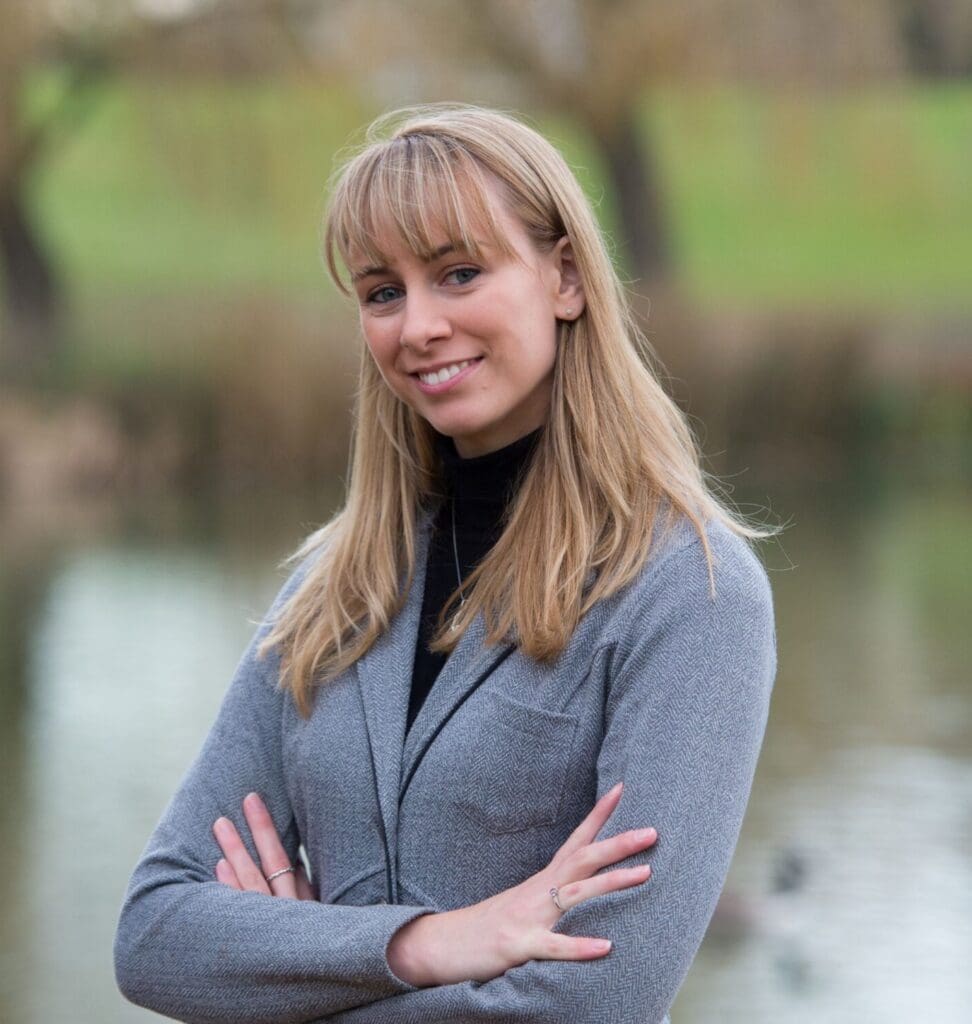
Professor Kayleigh Wyles
Last modified: August 19, 2025
About
About the organisation(s) I've worked for
Organisation name:
University of PlymouthAbout my experience and expertise
Personal statement:
Broadly speaking, my research (and teaching) focuses on the relationship between people and the natural world (often coastal/marine environments). This involves looking at how people engage with the natural world and the impacts it has on the individual (impacts on health and wellbeing, emotional bonds with nature, cognitive performance etc.) as well as understanding the drivers of behaviour that positively or negatively impact the natural world (such as studying the role humans play in socio-environmental issues such as marine plastics, overfishing, urbanisation). I’m particularly interested in experimental designs (in the lab or field) and largely apply quantitative approaches.
Key topic areas of research or interest:
- Behaviour change
- Developing and testing behaviour change initiatives (including Citizen science)
- Restorative environments / cultural ecosystem services
- Connection to nature / connection to the ocean / nature relatedness
Collaboration opportunities:
I love working trans-disciplinary, so interested in collaborating with anyone from policy, to industry, to NGOs, to other disciplines. So anyone who’s interested in bringing in the human dimension (a more individual perspective), especially around topics linked to the marine environment, I’m all ears.
Publications:
For full list, please see ORCID
Examples of work related to the wellbeing benefits of nature:
Smith, A., Wyles, K. J., Schofield, P., & Hughes, S. (2025). “Being away from everything”: Exploring the importance of access to nature for individuals living with chronic low back pain. The Journal of Pain, 105440. Doi: http://doi.org/10.1016/j.jpain.2025.105440
Gatersleben, B., White, E., Wyles, K. J., Golding, S. E., Murrell, G., Scarles, C., Xu, T., Brockett, B. F. T., Willis, C. (2024). Everyday places to get away – lessons learned from Covid-19 lockdowns. Landscape and Urban Planning, 246. Doi: http://doi.org/10.1016/j.landurbplan.2024.105026
Vitale, V., Martin, L., White, M. P., Elliott, L. R., Wyles, K. J., Browning, M. H., … & Fleming, L. E. (2022). Mechanisms underlying childhood exposure to blue spaces and adult subjective well-being: An 18-country analysis. Journal of Environmental Psychology, 101876. Doi: http://doi.org/10.1016/j.jenvp.2022.101876
Newman, M., Gatersleben, B., Wyles, K. J, & Ratcliffe, E. (2022) The use of virtual reality in environment experiences and the importance of realism. Journal of Environmental Psychology, 79, 101733. Doi: http://doi.org/10.1016/j.jenvp.2021.101733
Gatersleben, B., Wyles., K.J., Myers, A., & Opitz, B. (2020). Why are places so special? Uncovering how our brain reacts to meaningful places. Landscape & Urban Planning, 197, 103758. Doi: http://doi.org/10.1016/j.landurbplan.2020.103758
Wyles, K.J., White, M. P., Hattam, C., Pahl, S., King, H., & Austen, M. (2019). Are some natural environments more psychologically beneficial than others? The importance of type and quality on connectedness to nature and psychological restoration. Environment & Behavior, 51(2), 111-143. doi: http://doi.org/10.1177/0013916517738312
Wyles, K. J., Pahl, S., Holland, M., & Thompson, R. C. (2017). Can Beach Cleans Do More Than Clean-Up Litter? Comparing Beach Cleans to Other Coastal Activities. Environment & Behavior. 49, 509-535. Doi: http://doi.org/10.1177/0013916516649412
Examples of work related to pro-environmental behaviour:
Peacock, M., Ghilaridi-Lopes, N.P., Turra, A., Rech, T. F., Kawabe, L., Gatersleben, B., & Wyles, K. J. (2025) The future of citizen science for marine litter research: What are the benefits to be realised and the challenges to be overcome?. Marine Pollution Bulletin, 117914, Doi: http://doi.org/10.1016/j.marpolbul.2025.117914
Voronkova, A., Wyles, K., Syamsiyah, N., Soedjono, E., Henderson, L., Schultz, W., Jobling, S., & Pahl, S. (2025). Predictors of waste management behaviours in coastal communities in Indonesia: The role of community attachment and environmental concern. Marine Pollution Bulletin, 214, 117741. Doi: http://doi.org/10.1016/j.marpolbul.2025.117741
Nuojua, S., Cracknell, D., Heske, A., Pahl, S., Wyles, K. J., & Thompson, R. C. (2024). Global scoping review of behavioral interventions to reduce plastic pollution with recommendations for key sectors. Conservation Science and Practice, e13174. Doi:http://doi.org/10.1111/csp2.13174
Wyles, K. J. & Ghilardi-Lopes, N. P. (2023). Citizen science as a pro-environmental behaviour and a catalyst for further behaviour change. In B. Gatersleben & N Murtagh Research Handbook of Pro-Environmental Behaviour Change, (1st ed, pp 320-334)
Praet, E., Baeza-Álvarez, J., De Veer, D., Holtmann-Ahumada, G., Jones, J. S., Langford, S., … & Wyles, K. J. (2023). Bottle with a message: The role of story writing as an engagement tool to explore children’s perceptions of marine plastic litter. Marine Pollution Bulletin, 186, 114457. Doi: http://doi.org/10.1016/j.marpolbul.2022.114457
Keller, A., & Wyles, K. J. (2021). Straws, seals, and supermarkets: Topics in the newspaper coverage of marine plastic pollution. Marine Pollution Bulletin, 166, 112211. Doi: http://doi.org/10.1016/j.marpolbul.2021.112211
Beaumont, N. J., Aaneson, M., Austen, M., Börger, T., Clark, J.R., Cole, M., Hooper, T., Lindeque, P.K., Pascoe, C., & Wyles, K.J. (2019). Global ecological, social and economic impacts of marine plastic. Marine Pollution Bulletin, 142, 189-195. Doi: http://doi.org/10.1016/j.marpolbul.2019.03.022
Pahl, P., & Wyles, K. J. (2017). The human dimension: How social and behavioural research methods can help address microplastics in the environment. Analytical Methods, 9, 11404-1411. Doi: http://doi.org/10.1039/C6AY02647H
Other projects and networks:
Current and previous funded projects:
The Neoprene Project: Enhancing circularity in the surfing and diving industry: Examining the scope for neoprene recycling in the UK
https://futurefibresnetworkplus.com/ff/neoprene-recycling/
Increasing textile circularity; understanding barriers to recycled fibre quality and perception https://futurefibresnetworkplus.com/ff/increasing-textile-circularity/
Future Fibres Network+ https://futurefibresnetworkplus.com/
A Systems Analysis Approach to Reduce Plastic Waste in Indonesian Societies (PISCES) https://www.piscespartnership.org/
Preventing Plastic Pollution https://preventingplasticpollution.com/
Ocean LitterAcy (OLA) – Empowering society to combat marine litter through citizen science
AMRSim: A Microbial Reality Simulator http://amrsim.org/
CoastWEB: Valuing the contribution which coastal habitats make to human health and well-being, with a focus on the alleviation of coastal natural hazards and extreme events https://pml.ac.uk/coastweb/
MARP: MARine Plastic Pollution in the Arctic: origin, status, costs and incentives for Prevention