

How to run a successful writing retreat | Dr Sarah Golding
Published on 6 May 2026
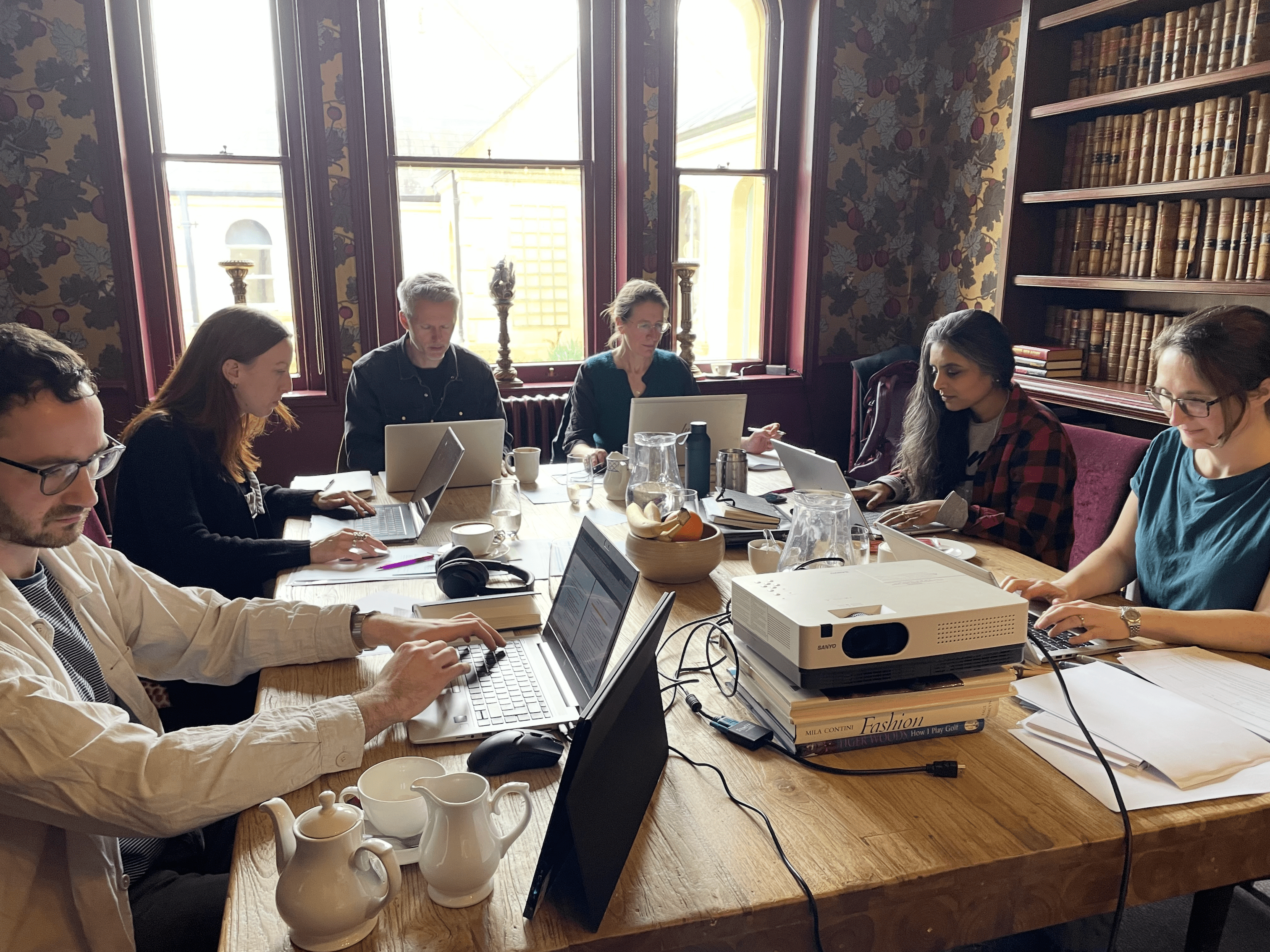
In February 2026, the ACCESS project hosted a 3-day writing retreat for our team of Knowledge Exchange & Impact Fellows. The event was organised by Dr Sarah Golding, who is our Knowledge Exchange Fellow for our Building Capacity workstream. In this blog, Sarah shares some of her top tips for organising a successful writing retreat.
Writing can be a gloriously fun, creative and joyful activity. It can also be challenging, frustrating and daunting.
Like many other professional writers, academics can struggle to find the time for regular engagement with the writing process. And it is a process.
Writing a journal article, stakeholder report, policy summary (or blog for your project website!) consists of multiple steps and a regular investment of time. Completing a writing project – however small or large – requires an ongoing commitment and engagement with the process of writing.
Sometimes we all need support with this process.
I am one of the Knowledge Exchange and Impact Fellows (KEIFs) for ACCESS. As a team we are regularly engaged in lots of ‘delivery’ activities – running workshops, planning events, meeting with partners, supporting the operations team.
Yet, as we enter the final year of ACCESS, we are also keenly aware of the need for us to consolidate and share key insights for the longer term. This means we need to do plenty of writing this year!
I therefore organised a writing retreat earlier this year to support us KEIFs with our writing. I have co-organised several residential events for ACCESS but had never attended a writing retreat before. To ensure the time at the event was beneficial, I sought advice from people who have run writing retreats and coached others with their writing (massive thanks to Dr Suzy Darke and Dr Nadya Yakovchuk for their invaluable advice).
Below, I share my key tips for organising a successful writing retreat.
Plan the programme thoughtfully and co-produce if practicable:
- Seek advice from professionals with experience of supporting writers: I spoke with writing coaches and researcher development specialists – we discussed how to structure the event, what types of activities to include, and how to balance the time allocated for silent, focused writing, with time allocated for other activities
- Invite input from people attending the event: ask participants if they have specific needs or wishes for the event (e.g., networking time, reflection time, peer discussion) – this might not be feasible if you are planning an event that is open to a wide cohort, but I strongly recommend this if you a planning a small event
- Encourage people to arrive prepared to write: yes, writing requires us to have done some reading and maybe some data analysis – but the primary goal while at the retreat is to get writing. Encourage people to do any background reading or initial data preparation before they arrive, to choose a specific piece of writing they want to work on, and to set SMART goals in advance
Consider the venue and other practical arrangements:
- Find a ‘retreat-style’ residential venue: a comfortable shared working space is vital and it helps to stay on site too, enabling people to be together for the whole event – this minimises travel time and means people can retreat to their bedrooms for down time or solo work, as well as socialise spontaneously between sessions
- Choose a venue with inviting and accessible outdoor surroundings: I chose a hotel with green grounds and nearby countryside, to provide us with opportunities to walk (alone or together) and get off-site – but urban venues can work too, as long as there are accessible areas for outdoor recreation (hotels on industrial estates are not so conducive to getting outside)
- Consider suitability of venue location: I selected our hotel on the basis of availability, accessibility, ‘retreatiness-feel’, meeting room and catering offerings – and proximity to a train station. The countryside is great, but not always easy to get to with a suitcase and no car!
- Allow travel time: we started at 10:30am on day 1, and finished at 4:00pm on day 3 to reduce the time burdens of being away from home
- Think about food provision: make sure there will be plenty of food on-site – and liaise with your venue to ensure they can cater for different dietary needs and handle any allergies
Set a welcoming, supportive tone:
- Share tips and tools in advance: provide a few supportive resources to help people prepare, such as suggestions for background noise apps or other blogs about what to expect from a writing retreat
- Set ‘gentle ground rules’: ideally co-produce these in advance, and collectively review again at the start of the event – focus on aspects such as respecting silence during writing sessions and minimising distractions from devices
- Give people choice and autonomy: attending all our sessions was optional, but I encouraged attendance at all sessions to build a collective sense of commitment – the shared endeavour of several people writing together seems to be part of the ‘magic’ of writing retreats
- Encourage use of ‘out of office’ replies: we all know emails and social media are distracting and can be a time sap – knowing you can ignore these communication channels during a writing retreat relieves the time burden of checking inboxes and feeds – and more importantly relieves the cognitive (and sometimes emotional) burden of engaging with these messages
Build in reflection time and support next steps:
- Build in breaks and encourage movement: people need time and space away from writing (and screens) during the retreat – deliberately ‘schedule’ free time, down time, social time, walking time
- Support relationship-building: as we were a small group, and already knew each other, I did not schedule any ‘networking sessions’ – but if I were to do this again for a larger group, or for a group who did not know each other, I would build this into the programme more formally
- Include peer discussion and reflective sessions: writing retreats can generate self-reflection about how we engage with writing, as well as provide opportunities for peer learning – encourage people to share successes, challenges and insights they experience during the retreat about their writing practices
- Close with a planning session: writing retreats can act as a ‘reset’ and provide a sense of renewed momentum – provide dedicated time towards the end of the programme to discuss and set goals for capturing this momentum (e.g., do participants want to form an ongoing writing circle? Have they set smart goals for their next writing sessions? Have they prioritised their current and future writing projects?)
One final point – I want to be clear that this event (e.g., venue costs, participants’ travel, my time for organising the event) was fully funded by the ACCESS project. Without this support – for which us KEIFs are very grateful – the event would not have taken place.
I have been involved with planning and delivering many events with ACCESS over the last few years and – beyond the various ‘how to’ insights we’ve shared in our evaluation reports – I have two other observations I want to share:
- Enthusiasm and passion among organising teams is vital for crafting engaging events – and in my experience, environmental social scientists in all sectors have that in abundance. People see the value in professional development events, and are often highly motivated to help run them.
- Funding is just as vital – to deliver interactive, co-created events well, without overloading organisers and risking burnout, requires resources. Event management takes a lot of time, energy and administrative work – it is not something that can be easily ‘fitted around the edges’ for people who are already working at full capacity.
All that said, I had a great time organising and attending what was my first ever writing retreat. So, if you are thinking about running your own event, talk to colleagues, convince your organisation to support you, and get planning – and then get writing!