

Interdisciplinary Working: Co-producing a New Toolkit | Anita Lateano
Published on 6 March 2026
 Anita Lateano is a Knowledge Exchange Fellow, working on the ACCESS/IES Environmental Social Science in Interdisciplinary Working project, which aims to strengthen interdisciplinary working between environmental and social scientists. Here she describes the outcomes from the project’s second roundtable, held in February 2026.
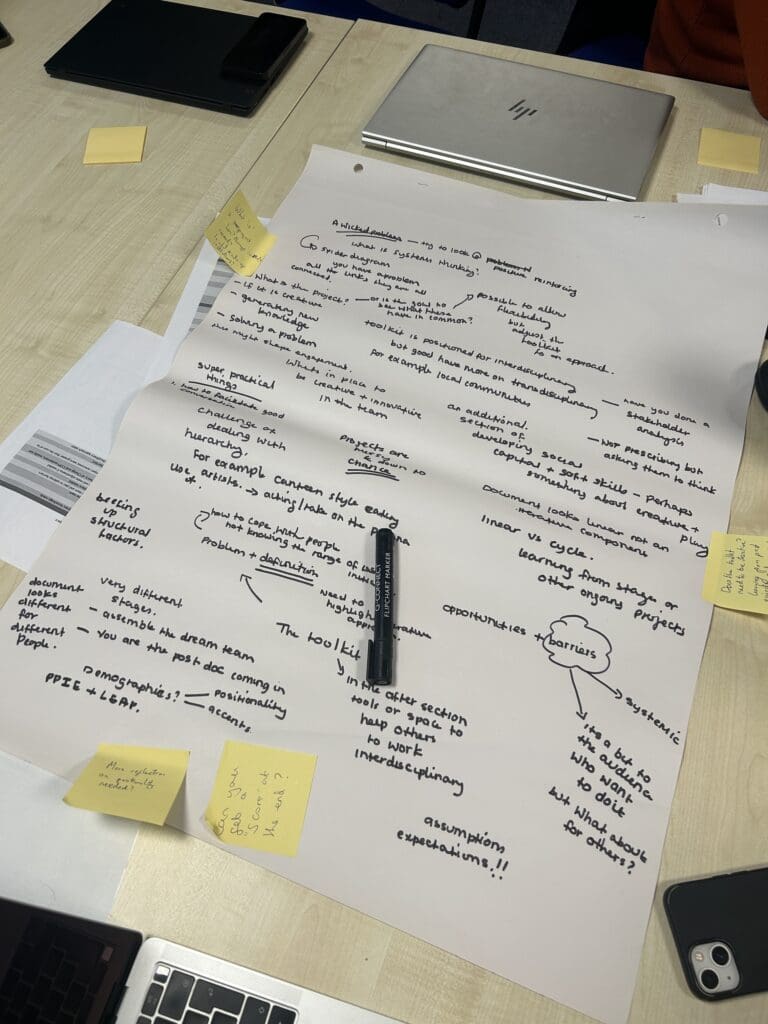
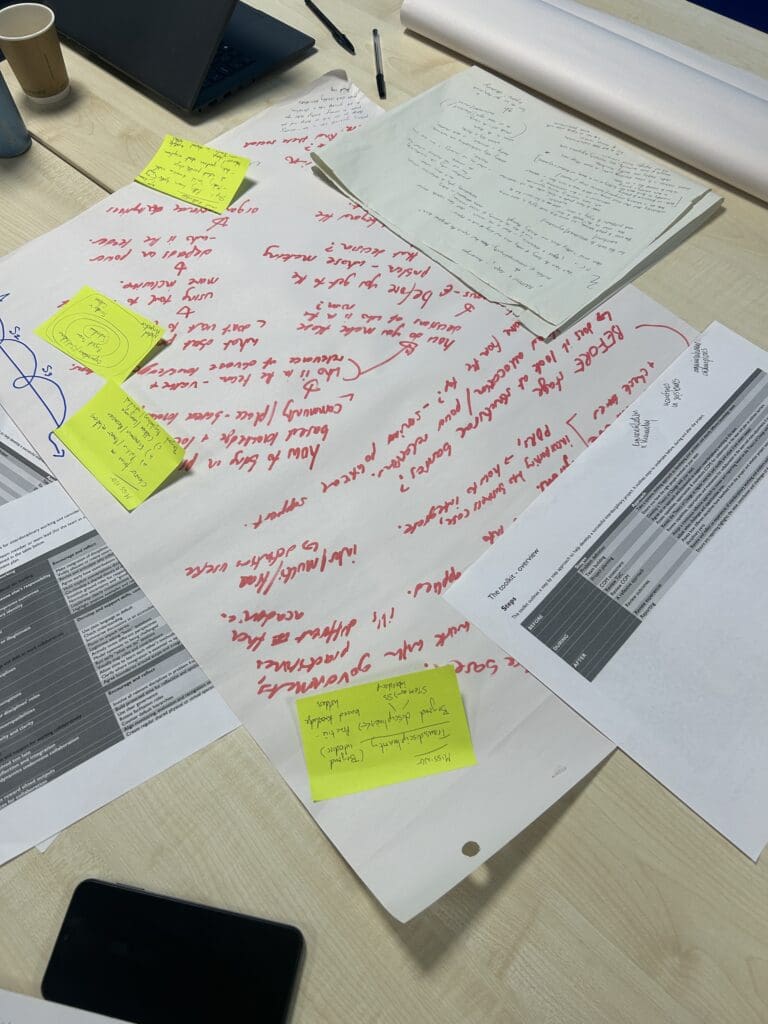
Whereas the first roundtable focused on sharing experiences and identifying enablers and barriers to interdisciplinary collaboration which includes environmental social sciences, this latest session moved from ideas to practice.
The workshop set out to:
- Test the toolkit “in action”: does it help people think differently about how they frame problems, assemble teams and plan projects?
- Understand how to address barriers of interdisciplinary working using a proposed tool to aid collaborative working across different projects.
- Gather practical feedback on how the toolkit needs to evolve so that it feels useful, realistic and adaptable across different sectors and organisational cultures.
- Who poses the initial question, and with what assumptions, has a powerful influence on how problems are framed; the toolkit therefore needs an explicit stage to interrogate this.
- Team composition and stakeholder involvement remain challenging, reinforcing the need for clearer guidance on roles, power dynamics and facilitation.
- Interdisciplinary work is inherently iterative, so the toolkit should be used as a flexible set of components that teams can revisit as their understanding, vision and indicators evolve.
Insights from this roundtable will now feed into a revised version of the toolkit and survey, ahead of piloting with interdisciplinary teams across sectors.
Read about the project here, or for more information, contact Anita Lateano: a.lateano@surrey.ac.uk